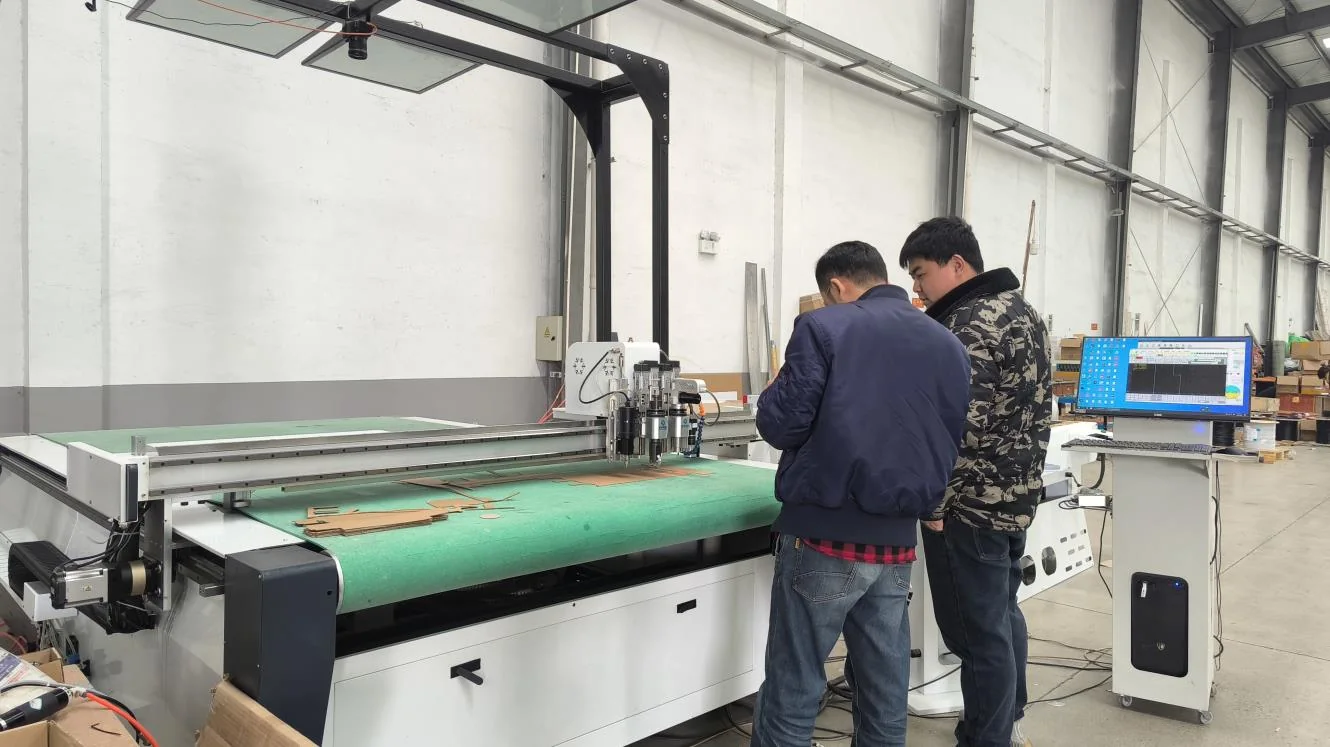
A CNC cutting machine does not usually fail without warning. Edge quality drifts, vacuum weakens, a rail gets contaminated or a blade wears. The operator sees the symptom after the part is already wrong.
A short, consistent maintenance routine protects the cut result and makes the machine easier to support.
Daily checks
Blade and tool holder
- Inspect the blade for chips, bends or a polished wear line.
- Confirm the tool holder is clean and seated.
- Check the depth setting against the material recipe.
- Remove debris from the tool area.
Table surface
- Remove loose chips and dust.
- Check the sacrificial mat or felt for cuts, grooves or contamination.
- Confirm the material is loaded flat and within the vacuum zone.
Vacuum
- Check that the correct zones are open.
- Look for hoses that are disconnected, crushed or blocked.
- Confirm the material is held firmly before starting.
Safety
- Test the emergency stop.
- Check guards and anti-collision devices.
- Confirm the operator area is clear.
Weekly checks
- Clean guide rails and racks with the approved method.
- Inspect vacuum filters and collection points.
- Check visible wiring and cable chains for rubbing.
- Inspect the tool changer or multiple-tool head.
- Review rejected parts and edge photos for a trend.
- Back up the cutting files and machine parameters.
Monthly checks
- Check machine alignment and squareness against the maintenance procedure.
- Inspect belts, couplings and fasteners.
- Verify the calibration or reference position.
- Review blade and wear-part consumption against production volume.
- Clean or replace filters as required.
- Test a reference drawing and compare the result with the baseline.
- Review the spare-parts stock.
Quarterly checks
- Conduct a more detailed mechanical inspection with the service provider.
- Review vacuum pump performance.
- Check electrical connections and safety devices.
- Revalidate the material recipes after any mechanical change.
- Review the operator training and incident log.
What changes the schedule
A machine cutting abrasive gasket sheet may need more frequent blade checks than one cutting soft foam. A shop running 24 hours needs daily checks on every shift, not one daily check for the whole week.
The maintenance plan should be based on:
- material abrasiveness
- hours per day
- dust and fibre load
- vacuum duty
- number of tool changes
- number of shifts
- water or humidity exposure
- factory housekeeping
A simple maintenance record
Use a table like this:
| Date | Hours | Blade | Vacuum | Rails | Fault / action | Operator |
|---|---|---|---|---|---|---|
| 05 Nov | 8 | Replaced | OK | Cleaned | None | A |
| 06 Nov | 16 | Inspected | Filter cleaned | Cleaned | Small edge chip | B |
The record is useful for warranty discussions and for spotting a recurring problem before it becomes a breakdown.
Spare parts to discuss at purchase
Ask the supplier to recommend:
- blades and a blade holder
- cutting mat or felt
- vacuum filter
- sensors
- belts or couplings if applicable
- emergency stop and fuse kit
- recommended lubrication
- a first-order consumables pack
Do not wait until the machine is down to ask what should have been stocked.
When to stop and call support
Stop cutting and contact support if:
- the edge quality changes suddenly
- the head hits the material or table
- the machine loses position
- vacuum cannot hold the sheet
- an emergency stop or guard fails
- a fault code repeats
- smoke, unusual noise or burning smell appears
A small check now is cheaper than a damaged tool, table or machine.
For spare parts or a machine-specific schedule, contact Shilai support.