
Case study
Serbia UAV Manufacturer Cuts Dry Fabric and Prepreg
A drone and fixed-wing UAV maker needed one machine for dry carbon, fiberglass and tacky prepreg supplied in 1300 mm rolls.
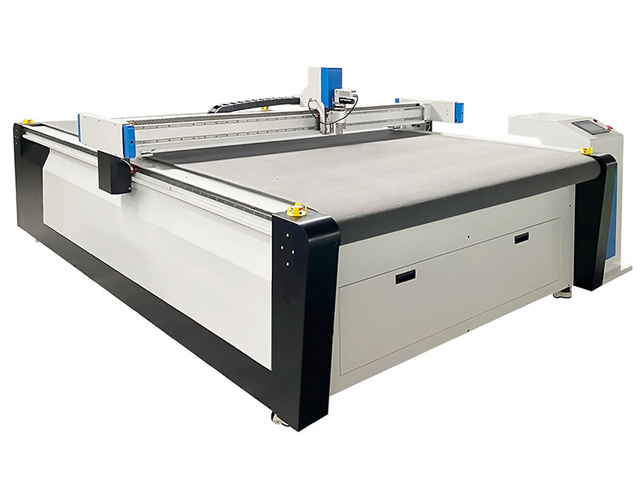
The situation
A Serbian company builds multirotor drones and fixed-wing UAVs. Its structures use carbon fibre and fiberglass in dry and prepreg forms. The materials arrive in rolls up to 1300 mm wide and 8000 mm long.
The production team needed a machine that could handle more than one material state. Dry fabric is easier to hold and cut. Prepreg is tacky, usually supplied with a liner and much less forgiving if it stretches or sticks to the table.
Why the material width set the platform
The roll width was 1300 mm. A 1.5 m working-width platform gave the necessary margin for edge handling and nesting without making the machine unnecessarily wide.
Automatic feeding was important because the rolls were long. A static table would force the operator to cut the material into short sections and handle the prepreg more often. Conveyor feeding keeps the material moving through the cutting area.
Tool and handling decisions
The machine was configured around the actual material set, not a generic “composite” specification. The discussion covered:
- dry carbon and fiberglass cutting
- prepreg with liner handling
- working width and roll length
- feed and vacuum strategy
- dual-side gantry drive
- cutting-file workflow
- blade life and replacement
- packing and shipping to Serbia
Dual-side drive was selected because it distributes force more evenly across the gantry. On a wide machine, that can reduce the risk of twisting or skew over time.
What the buyer asked before ordering
The buyer asked practical questions that apply to most composite projects:
- Can the machine cut both dry fabric and prepreg?
- What support is available in Europe?
- How long do blades last?
- Can blades be resharpened?
- What spare parts are shipped with the machine?
- What file formats are supported?
- Can the machine be operated from an office computer?
- What is the shipping and customs process?
Those questions are more useful than a generic list of features. They expose whether the supplier understands the production workflow.
What to test in a similar project
For dry fabric, test edge fraying and dimensional accuracy. For prepreg, test liner handling, tack, vacuum and whether the material distorts during feed.
Also test the actual roll width and the longest ply. A machine that works on an A4 sample may behave differently when the roll is 1300 mm wide and the ply is 8 m long.
The takeaway
Composite cutting is not one application. Dry carbon, glass, aramid and prepreg each need a different tool and handling strategy. The best configuration is built around the material format and the ply kit, not around a single “composite” label.
See CNC composite cutting machines and the SL1625CF platform, or send a ply sample for a cutting test.
Next step
Discuss a similar production problem.
Send the material, part drawing and current process. The first useful answer is whether a knife cutting process fits the job.